
Let’s Talk Trees: The Paperbark Thorn
Common name: Paperbark Thorn / Papierbasdoring
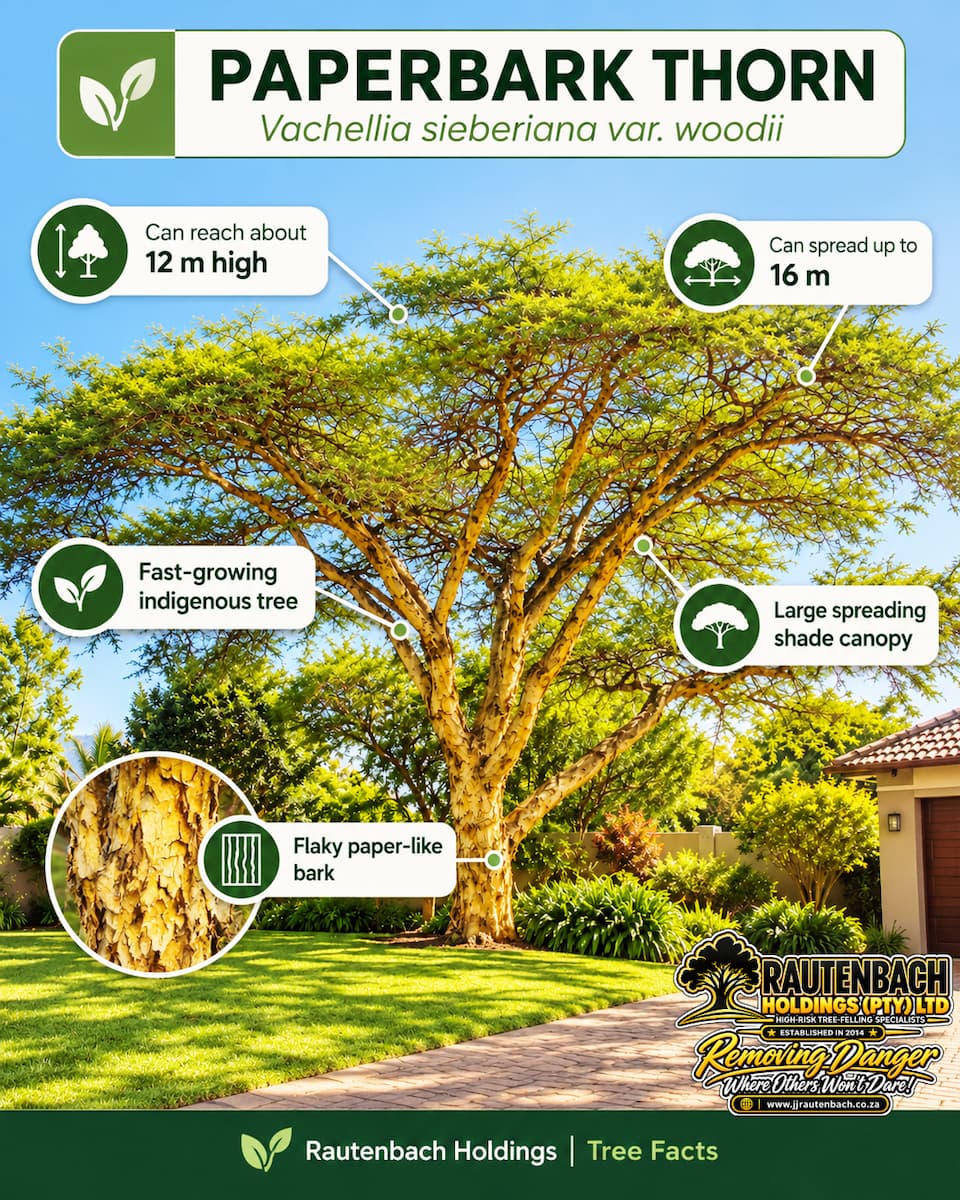
Botanical name: Vachellia sieberiana var. woodii (formerly known as Acacia sieberiana)
Origin: Indigenous to Southern Africa, including Limpopo
Growth habit: Large, spreading and characteristically flat-crowned
Mature size: Approximately 12 m high with a canopy that can spread to around 16 m
Rautenbach Holdings maintenance rating: High once mature
The Paperbark Thorn is an indigenous, flat-crowned tree exceptionally well suited to the subtropical climate of Tzaneen. It is also, in our local experience, one of the trees that deserves the most respect once it reaches maturity.
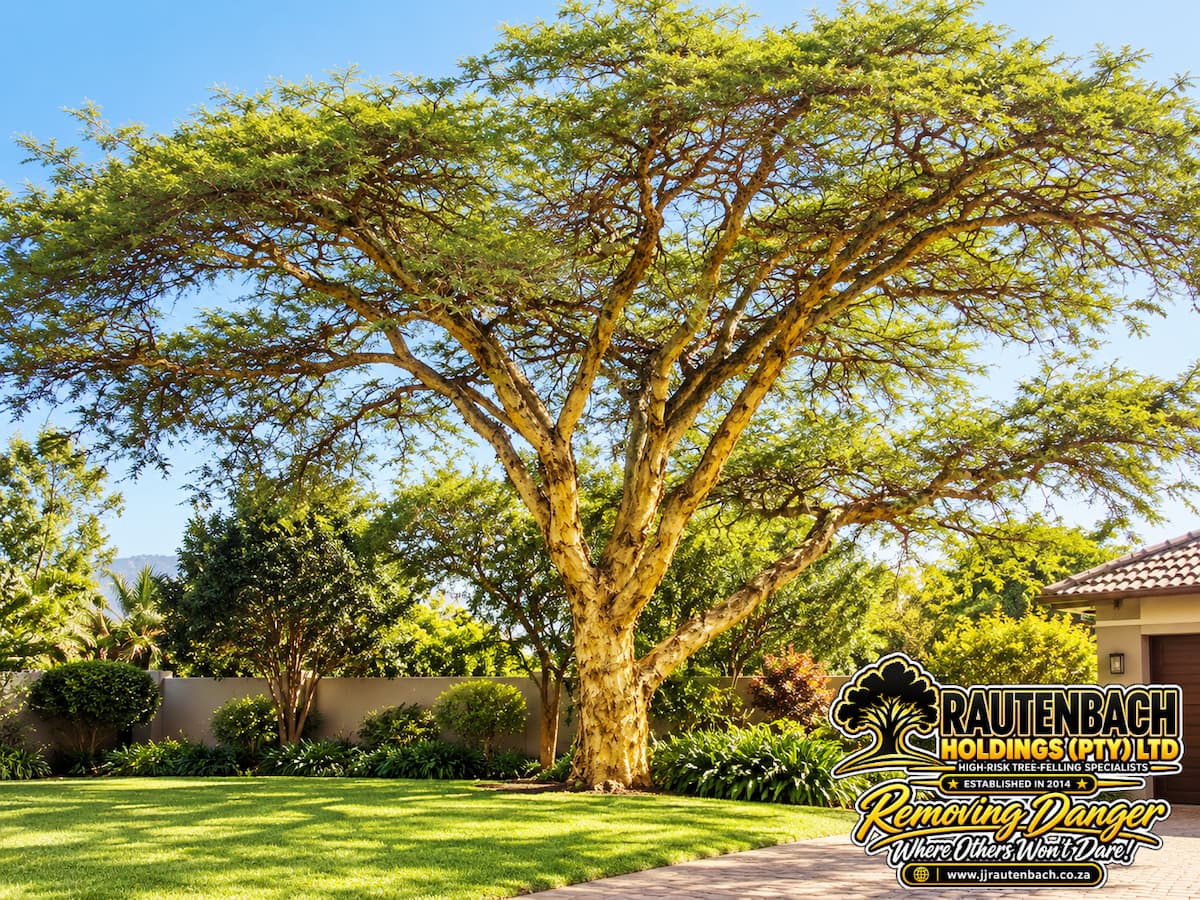
With its wide African-style canopy, pale flaky bark and impressive size, the Paperbark Thorn can be a magnificent feature tree. In Tzaneen’s warm climate it can grow quickly and develop into a very large shade tree.
But that size is exactly why its planting position and long-term maintenance matter. A mature Paperbark Thorn can dominate a residential garden, and when structural problems develop, the branches and canopy are large enough to cause serious damage.
Why Do We Watch These Trees So Carefully?
In Rautenbach Holdings’ experience around Tzaneen and the surrounding areas, Paperbark Thorns are among the trees we encounter regularly after major branch failures and complete tree failures.
That does not mean every Paperbark Thorn is dangerous. A healthy, well-positioned specimen can remain a beautiful and valuable tree for many years.
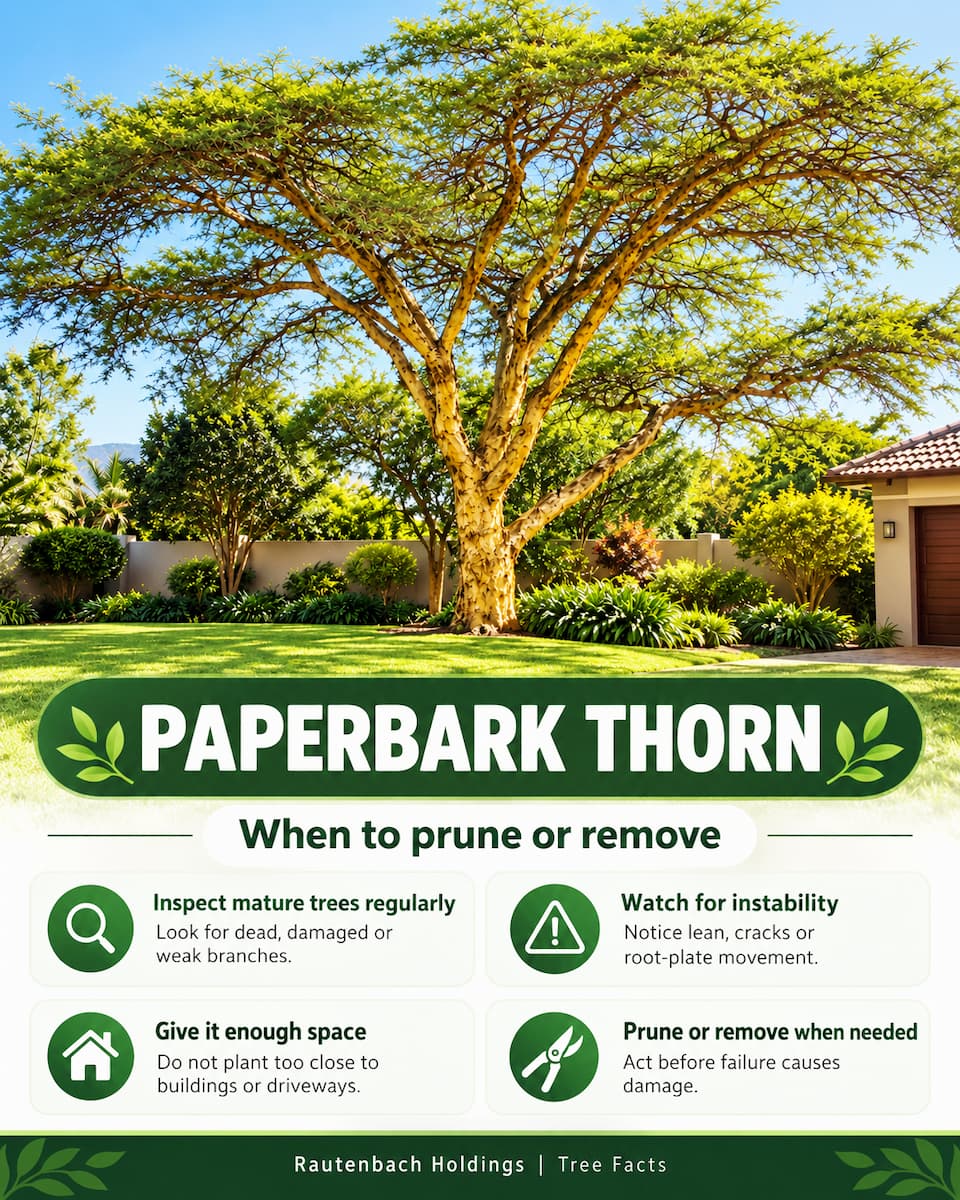
What matters is recognising problems before failure occurs. Warning signs include:
- Large dead or declining limbs.
- Cracks where major branches join the trunk.
- Previous large branch failures.
- Decay or cavities in the trunk or major unions.
- A noticeable increase in lean.
- Movement, lifting or cracking of soil around the root plate.
When Should You Prune Rather Than Remove?
Our first priority is always to keep a tree in the best condition possible where it can safely be retained.
A structurally sound Paperbark Thorn may benefit from selective pruning, deadwood removal and careful canopy management. Removing weak or badly positioned branches before they become excessively heavy can significantly reduce future problems.
What we do not recommend is unnecessarily hacking or topping a healthy tree. Correct pruning should improve its structure while preserving its natural flat-crowned shape.
Removal becomes necessary when serious instability, advanced decay, repeated major failures or significant root movement means the tree can no longer be managed at an acceptable level of risk.
Is It a Good Tree for a Residential Property?
Yes—but only if you have enough space.
This is not a small suburban tree. A canopy potentially spreading around 16 metres needs room above ground, while the root system also requires sufficient undisturbed soil below.
We would avoid planting a Paperbark Thorn directly beside a house, driveway, boundary wall, swimming pool or permanent parking area. Plant according to the mature tree you will have in twenty years, not the young tree standing in the nursery today.
Let’s Talk Trees – The Rautenbach Holdings Perspective
The Paperbark Thorn is exactly the type of tree we want people to understand rather than fear.
If it is healthy, correctly positioned and manageable, our priority is to preserve it through sensible pruning and maintenance.
If it becomes structurally unsafe and removal is the responsible option, then our responsibility is to dismantle and remove it as safely as possible while protecting your house, walls, garden and surrounding property from damage.
Have your mature Paperbark Thorn assessed before a broken branch or unstable tree turns routine maintenance into an emergency.
Let’s talk trees. Do you have a mature Paperbark Thorn on your property?
Contact Rautenbach Holdings for professional pruning, deadwood removal, canopy management, tree-risk assessment or high-risk tree removal.
Call:
073 074 9716 |
079 143 0056
WhatsApp:
073 074 9716
Email:
info@jjrautenbach.co.za
Removing danger where others won’t dare.